The theory that stands out to me the most is Jack Balkin’s idea of “Promote Innovation” from Living Originalism. The Author explains how, when people have freedom of speech, society can become more creative. People are able to share their ideas and their own different ways of thinking. I think this idea connects a lot to social media because social media is such a big part of everyday life, especially for people my age.
I use social media almost every day. I use Instagram, TikTok, and Snapchat to talk to my friends, watch videos, and see what is happening in the world. Social media is also a place where people can share their ideas and market themselves or other things. Someone can post something that they created, and it can reach thousands or even millions of people. This is an example of innovation because people can take an idea and turn it into something much bigger.
For example, people can even use TikTok and Instagram to start and build businesses. Someone might make a new type of clothing or makeup product and market it by posting online. If the post does well, the person can turn that idea into a real business. I think this would have been much harder to do before social media became so popular. People now have a way to share their ideas without needing a big company or a lot of money behind them.
There are also a lot of opinions about social media and how it can affect people. California recently passed new laws dealing with social media and children. The laws include restrictions like the autoplay feature and controlling certain feeds for people under 16. (California's new social media laws)
AI DISCLOSURE -I used Microsoft Copilot as a brainstorming and research assistance tool while developing this blog post. Copilot helped me identify sources and organize my ideas. I reviewed the information provided, selected the sources used, and wrote and revised the final post myself. The opinions, reflections, and conclusions expressed in this assignment are my own.
My name is Gerrit Smith, and I thank you for gathering here tonight to discuss one of the most important moral questions facing our nation: the question of slavery.
I come before you not merely as a reformer or a politician, but as a fellow citizen who believes that every human being is entitled to liberty. Slavery is not simply a political disagreement. It is a moral wrong. It denies men, women, and children the most basic rights given to them by God and by nature.
For far too long, our country has tolerated a system that allows one person to claim ownership over another. Families are separated. Human beings are bought and sold. Their labor is taken from them without consent. Their freedom is stripped away. No nation that calls itself free can honestly defend such practices.
Many people tell us that slavery will eventually disappear on its own. Others say that abolishing it too quickly would be disruptive. I must respectfully disagree. If slavery is wrong, then it is wrong today. If a person deserves freedom, then that person deserves freedom now. Justice delayed is justice denied.
My opposition to slavery is rooted in my Christian faith. I believe that all people are equal before God. The command to love our neighbors cannot be reconciled with the buying and selling of human beings. Some attempt to use religion to justify slavery, but I believe that true Christianity calls us to stand with the oppressed, not with their oppressors.
Faith, however, is not enough if it remains silent. We must be willing to act. We must speak against slavery openly in our churches, our communities, and our government. The time for silence has passed.
For this reason, I have supported the antislavery movement with both my voice and my resources. I have worked alongside dedicated abolitionists and supported efforts to spread antislavery ideas throughout the country. I have also opened my home in Peterboro to those seeking freedom and supported the cause of the Underground Railroad. I believe that when people are fleeing injustice, they deserve help, not punishment.[nationalab...museum.org], [britannica.com]
I also believe that political action is necessary. Slavery will not disappear simply because we wish it away. Citizens must use the power of voting, organizing, and public debate to challenge laws that protect human bondage. Governments exist to secure liberty, not to deny it.
Yet freedom means more than breaking chains. A truly free society must provide opportunity. Black Americans deserve the chance to own land, receive an education, and participate fully in American life. Freedom without opportunity is incomplete.
My friends, history will judge the choices we make today. Future generations will ask whether we stood against slavery when it was difficult, or whether we remained silent when our voices were needed most.
I ask each of you to choose courage over comfort. Choose justice over convenience. Choose freedom over oppression.
If we truly believe in liberty, then we must extend it to all people, regardless of race or circumstance. Let us work together to build a nation that lives up to its highest principles and finally fulfills the promise of freedom.
Thank you, and may God guide us in this righteous cause.
AI DISCLOSURE : AI was used in a limited way in this assignment. I used AI to find facts about Gerrit Smith. I personalized those notes. I then used Copilot to help me clean up the text for grammar, spelling, and punctuation I also asked the tool to help me shape it into the form of a blog post, I then edited the text, added links and added images and captions.
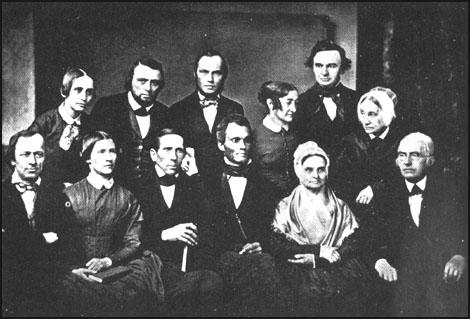
The American Anti-Slavery Society, or AASS, was founded in Philadelphia on December 4, 1833. Its leaders included William Lloyd Garrison and Arthur Tappan. The organization brought together abolitionists who wanted to make ending slavery a national priority (Library of Congress, “The American Anti-Slavery Society”).
When Americans talk about freedom, we often think about the Declaration of Independence and the idea that everyone is created equal. But in the 1800s, slavery made that promise impossible for millions of people. The American Anti-Slavery Society was one of the organizations that challenged this contradiction.
The AASS believed that freedom could not wait.
At the time, some people supported gradual emancipation, meaning slavery would end slowly over time. The AASS rejected that approach. Its members argued that enslaved people deserved freedom immediately and without compensation to slaveholders. They also connected their beliefs to the Declaration of Independence and its promise of equality (American Anti-Slavery Society, Declaration of Sentiments).
The society used several ways to spread its message. Members gave speeches, published newspapers and pamphlets, organized local chapters, and sent petitions to Congress. The organization also encouraged boycotts of cotton and other products made through slave labor (Library of Congress, “American Anti-Slavery Society”).
The movement grew quickly. By the 1840s, the AASS had become a major national abolitionist organization. Its publications and public lectures helped bring antislavery ideas to people throughout the country (Library of Congress, “American Anti-Slavery Society”).
One of the most important parts of the AASS was its connection to Black abolitionists.
Frederick Douglass became one of the movement’s most influential speakers. In 1841, after speaking at an antislavery meeting, Douglass was hired as an abolitionist speaker and became closely connected with William Lloyd Garrison and the abolitionist movement (Library of Congress, “Frederick Douglass Timeline”).
The society also faced serious opposition. Some Americans believed abolitionists were threatening the country’s stability. Antislavery activists faced harassment and violence because of their beliefs.
The AASS also had disagreements within its own ranks. Some members wanted to work through politics, while others, including Garrison, believed the Constitution itself supported slavery. These disagreements eventually caused divisions within the abolitionist movement.
Even with those problems, the society made a lasting impact. It helped organize people around the idea that slavery was a national injustice. It also helped keep abolition in the national conversation through speeches, publications, and activism.
The AASS did not end slavery by itself. The Civil War, the Emancipation Proclamation, and the Thirteenth Amendment were all major parts of the process. However, the society helped build the abolitionist movement that pushed the country toward emancipation.
The organization eventually dissolved in 1870, five years after the Thirteenth Amendment abolished slavery (Library of Congress, “American Anti-Slavery Society”).
The American Anti-Slavery Society matters because it shows that freedom is not just an idea—it is something people have to fight to make real.
Its members challenged America to live up to its own promises. Their work reminds us that major changes often begin with people who are willing to question what society has accepted for too long.
Works Cited
American Anti-Slavery Society. The Constitution of the American Anti-Slavery Society: With the Declaration of the National Anti-Slavery Convention at Philadelphia, December, 1833. 1838. Library of Congress.
Library of Congress. “American Anti-Slavery Society.” A Nation of Joiners: Voluntary Associations in America, Library of Congress.
Library of Congress. “Frederick Douglass Timeline.” Frederick Douglass Papers, Library of Congress.
Throughout history, Christianity has been used both to support slavery and to be against it. People on both sides of the debate looked to the Bible for guidance and used different passages to justify their beliefs. As a result, the same religious text was interpreted and translated in very different ways over time.
Many Christians reached the opposing conclusion and argued that the Bible's overall message was against slavery. One of the strongest arguments came from Galatians 3:28, which teaches that there is neither slavery or freedom because all people are one in Jesus Christ. Abolitionists believed this verse demonstrated the equality of all human beings before God and challenged the idea that one person could possibly own another.
People that agreed with slavery also emphasized the Bible's teachings on freedom. Galatians 5:1 declares that Christ has set people free, and many Christians believed that owning another person contradicted this statement. They argued that the message of Christianity promotes liberty, dignity, and respect for every individual. [openbible.info], [biblestudytools.com]
Another important argument came from Exodus 21:16, which agrees with kidnapping and selling people into slavery. Since the slave trade involved forcing humans to be transported, abolitionists believed it violated biblical law. They also pointed to Luke 4:18, where Jesus speaks of bringing freedom to the oppressed. Together, these passages led many Christians to conclude that slavery was inconsistent with the values of justice, compassion, and human equality taught throughout the Bible.
However, some Christians used the Bible to argue that slavery was acceptable. They pointed out that the Old Testament contains laws that support slavery rather than completely banning it. One of the most commonly cited passages was Leviticus 25:44-46, which states that the Israelites could get male and female slaves from surrounding nations and pass them on as inherited property. Supporters believed that because these instructions were included in God's law, slavery was permitted under certain circumstances. [openbible.info]
Christians who believed in slavery also referred to verses in the New Testament. Ephesians 6:5 tells slaves to obey their, “earthly masters with respect and sincerity”, while 1 Peter 2:18 tells servants to, “submit to their masters, even when those masters are harsh”. These passages are evidence that slavery was accepted in the early Christian world. [openbible.info], [biblestudytools.com]
Another argument was that Jesus never directly called for the abolition of slavery. Because the New Testament focuses on spiritual salvation rather than ending social institutions, some Christians concluded that slavery itself was not sinful. As a result, supporters believed that as long as masters treated their slaves fairly, slavery could exist in a Christian society. [biblestudytools.com], [openbible.info]
In conclusion, the Bible has been used throughout history to support both sides of the slavery debate. Some Christians focused on passages that regulated slavery and taught obedience, while others emphasized freedom and equality. These different interpretations demonstrate how religious beliefs can influence social issues and why understanding historical context is important when studying religion and slavery.
AI DISCLOSURE : AI was used in a limited way in this assignment. I used AI to find facts about Gerrit Smith. I personalized those notes. I then used Copilot to help me clean up the text for grammar, spelling, and punctuation I also asked the tool to help me shape it into the form of a blog post, I then edited the text, added links and added images and captions.
The American Anti-Slavery Society: A Fight for Freedom
When Americans talk about freedom, we often think about the Declaration of Independence and the idea that everyone is created equal. But in the 1800s, slavery made that promise impossible for millions of people. The American Anti-Slavery Society was one of the organizations that challenged this contradiction.
The American Anti-Slavery Society, or AASS, was founded in Philadelphia on December 4, 1833. Its leaders included William Lloyd Garrison and Arthur Tappan. The organization brought together abolitionists who wanted to make ending slavery a national priority (Library of Congress, “The American Anti-Slavery Society”).
The AASS believed that freedom could not wait.
At the time, some people supported gradual emancipation, meaning slavery would end slowly over time. The AASS rejected that approach. Its members argued that enslaved people deserved freedom immediately and without compensation to slaveholders. They also connected their beliefs to the Declaration of Independence and its promise of equality (American Anti-Slavery Society, Declaration of Sentiments).
The society used several ways to spread its message. Members gave speeches, published newspapers and pamphlets, organized local chapters, and sent petitions to Congress. These efforts helped bring antislavery ideas to people who might not have thought about slavery before (Library of Congress, “The American Anti-Slavery Society”).
The movement grew quickly. By 1840, the AASS had about 2,000 affiliated groups and as many as 250,000 members. That growth showed that abolitionism was becoming a national movement instead of just a small reform effort (Library of Congress, “The American Anti-Slavery Society”).
One of the most important parts of the AASS was its connection to Black abolitionists.
Frederick Douglass became one of the movement’s most influential speakers. His personal experience with slavery gave him a powerful voice in the fight for freedom. He helped show that formerly enslaved people were not just the subjects of the abolitionist movement—they were leaders in it (Library of Congress, “The American Anti-Slavery Society”).
The society also faced serious opposition. Some Americans believed abolitionists were threatening the country’s stability. Antislavery speakers and activists were often attacked or harassed, and the movement was not an easy one to join (Library of Congress, “The American Anti-Slavery Society”).
The AASS also had disagreements within its own ranks. Some members wanted to work through politics, while others believed the Constitution itself supported slavery and should be challenged. These disagreements eventually led to splits in the movement (Library of Congress, “The American Anti-Slavery Society”).
Even with those problems, the society made a lasting impact. It helped organize people around the idea that slavery was a national injustice. It also helped create the public pressure that kept abolition in the national conversation.
The AASS did not end slavery by itself. The Civil War, the Emancipation Proclamation, and the Thirteenth Amendment were all major parts of that process. But the society helped build the movement that pushed the country toward those changes (Library of Congress, “The American Anti-Slavery Society”).
The organization eventually dissolved in 1870, five years after the Thirteenth Amendment abolished slavery (Library of Congress, “The American Anti-Slavery Society”).
The American Anti-Slavery Society matters because it shows that freedom is not just an idea—it is something people have to fight to make real.
Its members challenged America to live up to its own promises. Their work reminds us that major changes often begin with people who are willing to question what society has accepted for too long.
Works Cited
American Anti-Slavery Society. The Constitution of the American Anti-Slavery Society: With the Declaration of the National Anti-Slavery Convention at Philadelphia, December, 1833, and the Address to the Public, Issued by the Executive Committee of the Society, in September, 1835. 1838. Library of Congress, https://www.loc.gov/item/2001615799/.
AI DISCLOSURE : AI was used in a limited way in this assignment. I took ample notes while watching a 20-minute video about the U.S Supreme Court. I then personalized those notes by adding my point of view, for example, things I found surprising or interesting about what I learned. I then used Claude AI to help me clean up the text for grammar, spelling, and punctintion I also asked the tool to help me shape it into the form of a blog post, I then edited the text, added links and added images and captions.
In today's class we watched two videos, Part 1 and Part 2. The two videos explained not only the purpose of the Supreme Court but also the history. The Supreme Court is part of the judicial branch of the US government and controls the constitution and deciding whether laws follow it. I was surprised to learn how much power the Supreme Court has to make decisions about a person's freedom. I also did not realize that the Supreme Court does not hear every case that is brought to them and only chooses a small number of cases. A key takeaway I took from the videos was the Supreme Court is very important as it helps to make sure that laws follow the Constitution. I learned that the decisions made by the Supreme Court can have a major impact on people's everyday lives and their freedom.
I also learned about the process a case goes through before reaching the Supreme Court. Cases usually begin in lower courts and go through the appeals process before a party can ask the Supreme Court to review the case. If the Court agrees to hear it, lawyers submit written briefs, present oral arguments, and the Justices eventually discuss and vote on the case.
The key takeaway I took from the videos was that the Supreme Court has a major impact on everyday life and individual freedom. I also learned that the Court’s authority depends heavily on the trust and support of the American public and the other branches of government.
AI DISCLOSURE : AI was used in a limited way in this assignment. I took ample notes while watching a 20-minute video about the U.S Supreme Court. I then personalized those notes by adding my point of view, for example, things I found surprising or interesting about what I learned. I then used Claude AI to help me clean up the text for grammar, spelling, and punctintion I also asked the tool to help me shape it into the form of a blog post, I then edited the text, added links and added images and captions.